Project Summary
Creating a flexible, forward-thinking Technology Plan as a tool to align values and guide decision-making in a public library.
Responsibilities & Timeline
- August 2020: Co-created futures scenarios in a team of 2 based on strategic foresight patterns derived from current societal and technology trends.
- October 2020: Worked through discoveries with the Library Director to align priorities and values from those future scenarios with the current Strategic Plan.
- October – December 2020: Wrote the Technology Plan. Evaluated and aligned Jira project list to the new plan.
- February, April 2021: Presented the plan to stakeholders and finalized changes.
What is a Technology Plan?
There are many flavors of Technology Plans used for slightly different purposes. In this case, the Technology Plan is a primarily internal tool for making decisions and setting priorities for the Technology & Technical Services Department in support of Library services.
It encompasses planning for network infrastructure, device endpoints, online services, and technical training and support for all library departments and the public.
Problems with the old structure
The Library used to create a fixed 3-year technology plan, which outlined the current state of technology and itemized goals to meet and projects to complete during that period. By year 3, the plan felt out of date. The goals behind remaining projects were still valid, but newer technology may have altered our approach to the project. We would then spend time explaining why we shouldn’t be locked into the approach that was created 3 years earlier.
Previous tech plans also focused on the systems and requirements at the expense of prioritizing what people actually needed from those systems.
A more flexible, human-centered approach
Simplicity supports complexity
Avon Library aims to support the complex and diverse needs of the Library organization and community with technology that is simple, flexible, and reliable.
I wrote the plan to focus on people, because technology is a part of every department. There are very few, if any, public services and processes that don’t overlap, so technology goals should support the larger strategic plan for the library and communicate our decision-making process clearly to staff in other departments.
The Process
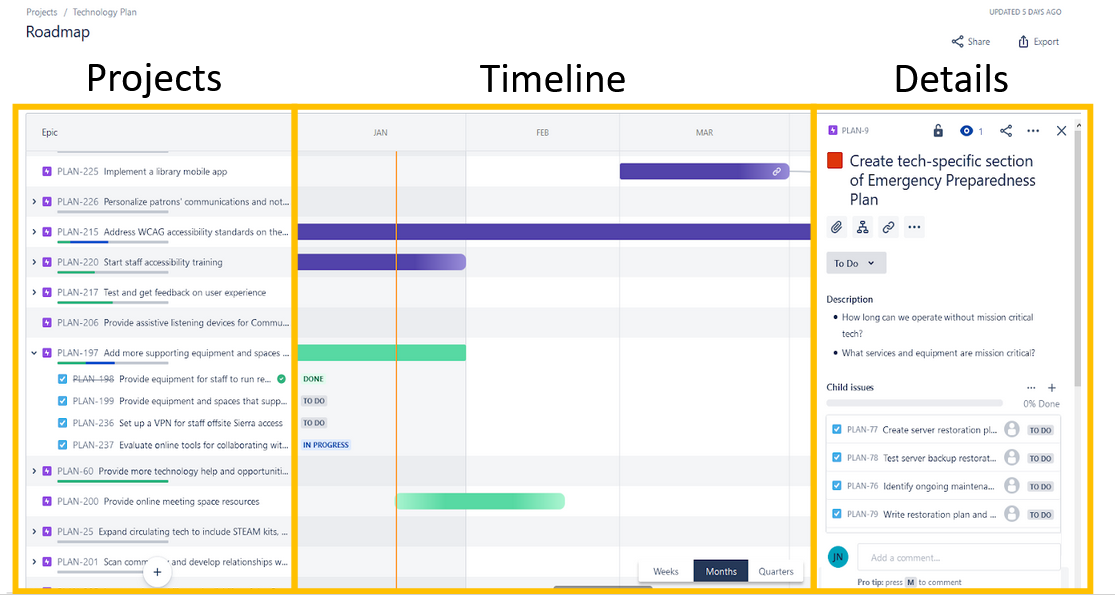
The new tech plan is divided into two parts: long-term guideposts for ongoing decision-making and an Agile-based, evolving project list in Jira to link those long-term values to day-to-day tasks.
Part 1: A decision-making tool aligned to long term goals
The Technology Plan has 4 people-focused guideposts. These explain the values that the organization should consider for each technology project.
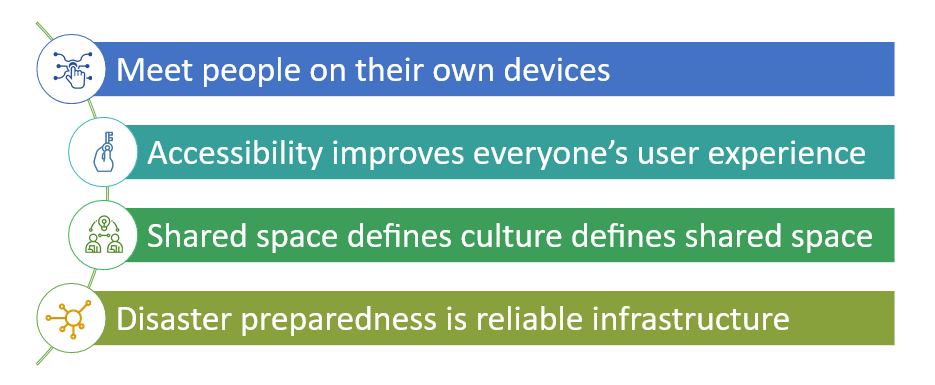
To arrive at these guideposts, we followed a strategic foresight process that I learned earlier that year from the Kedge Futures School Applied Foresight Accelerator Program, a workshop I attended with the Connecticut State Library.
The Library Technology Assistant and I used these tools and techniques to analyze larger trends in technology and society and how they might affect the library and the way that people use it. Some of our collaboration was done in person, and some on Google Jamboard.
Ideally, this process would have incorporated a larger, more diverse group of stakeholders. We chose to do this with a 2-person team for two reasons:
- Because this was a new process, we wanted to start small and work through it.
- Because of the pandemic, it was not possible to include more people in the in-person sessions. The physicality of moving through space in person also helped with pattern-making and generated deeper discussions that we likely would have had if it had been all online.
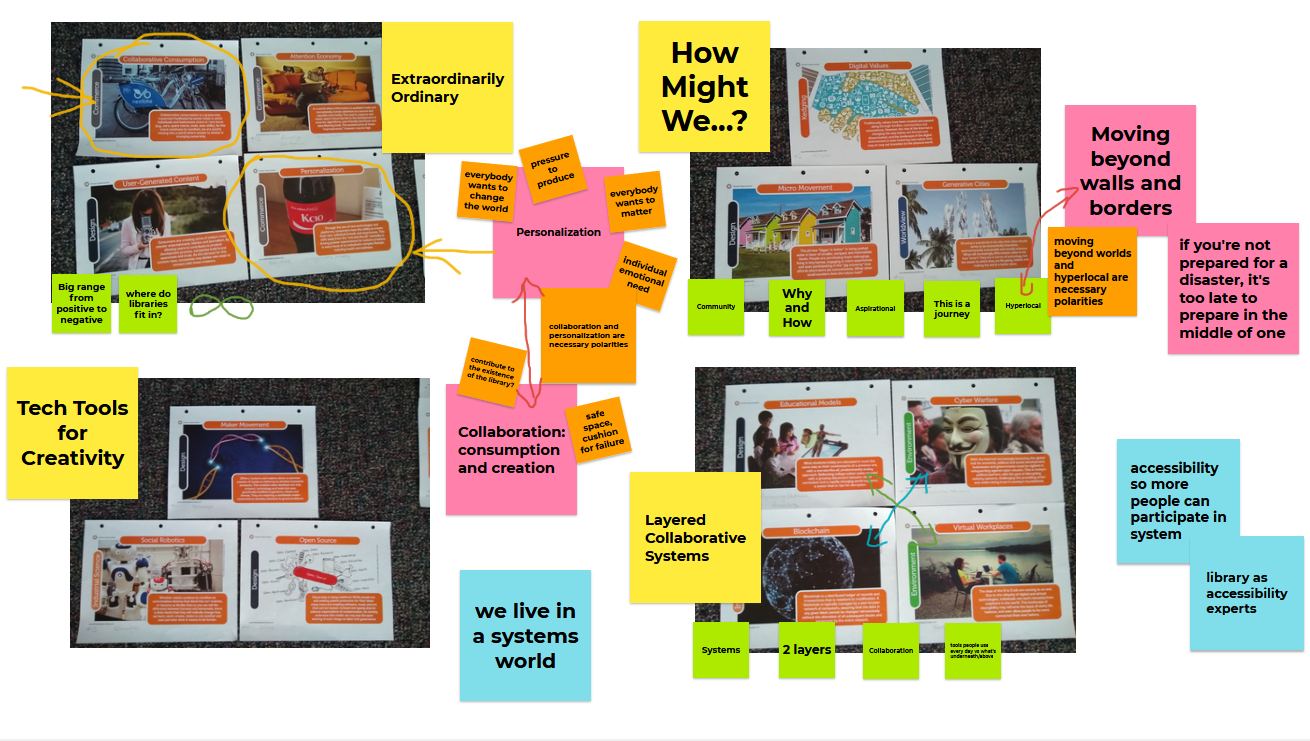
Distilling connections and patterns among trends into key themes 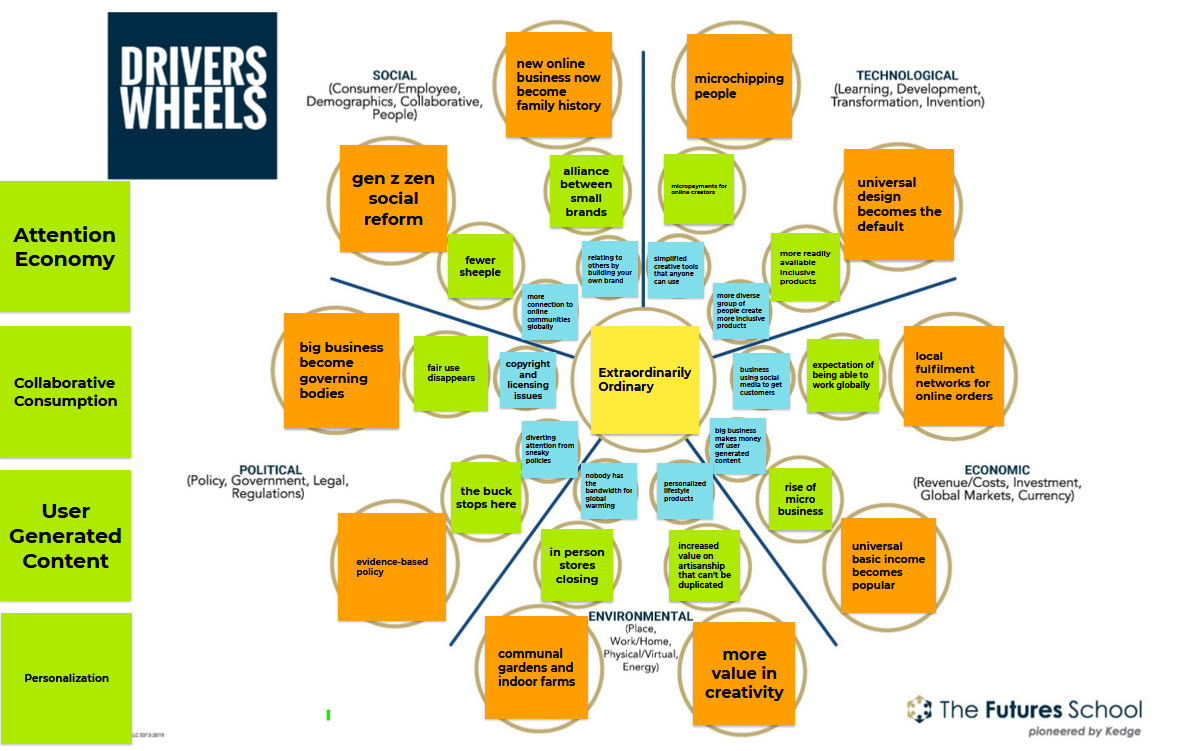
Using Futures School tools to project how key themes would play out across sectors in the future
…Which we then used to create 3 alternate versions of the year 2045: a dystopia, a utopia, and a middle-of-the-road realistic view. As visual people, collage felt like the most effective tool to represent the elements that make up each version of the future.
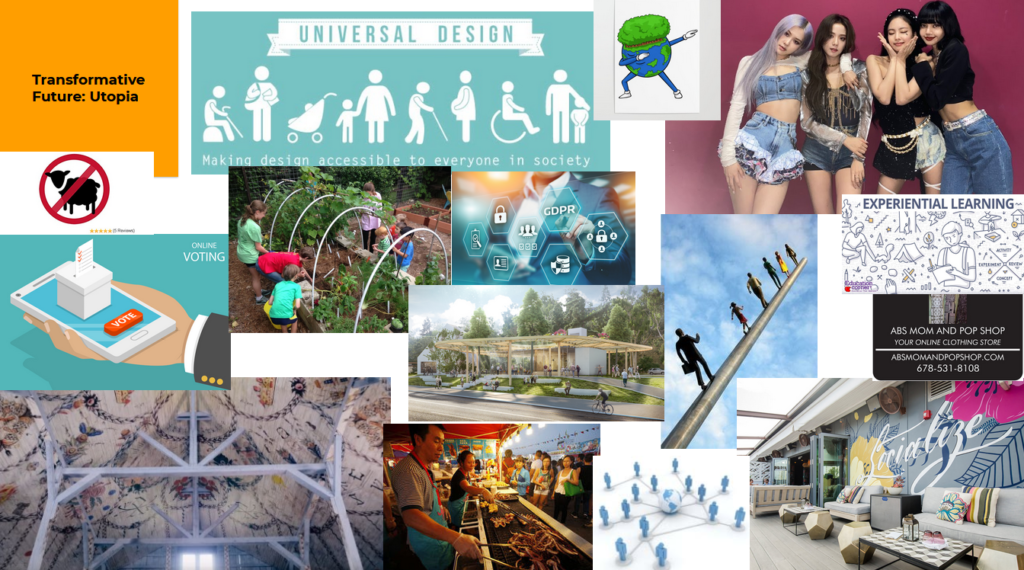
I later pulled some of these elements out to highlight some of the major trends.
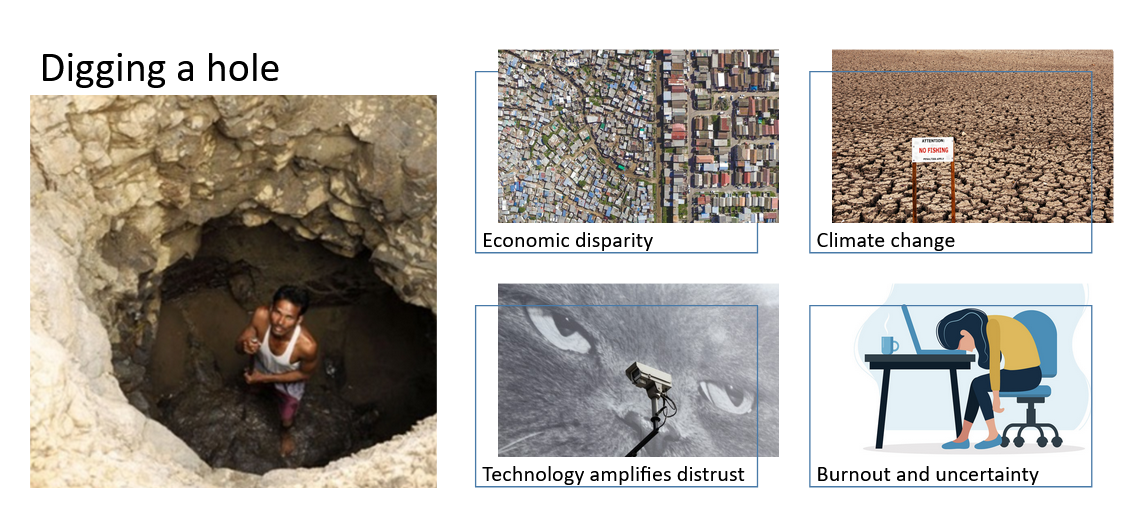
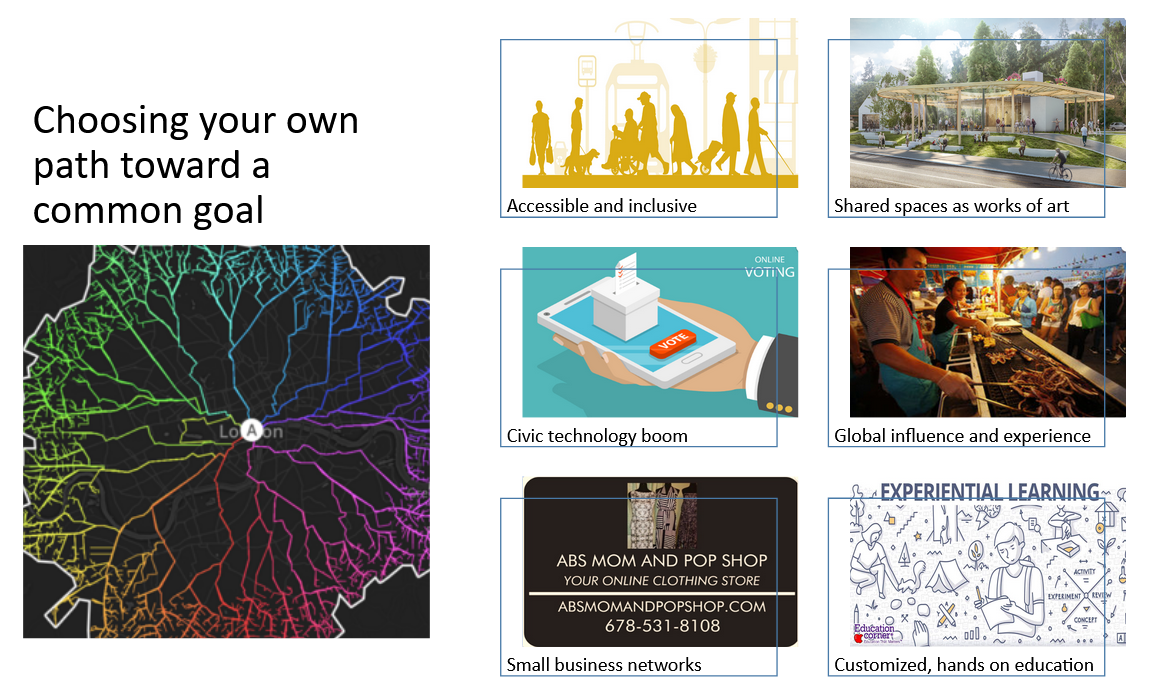
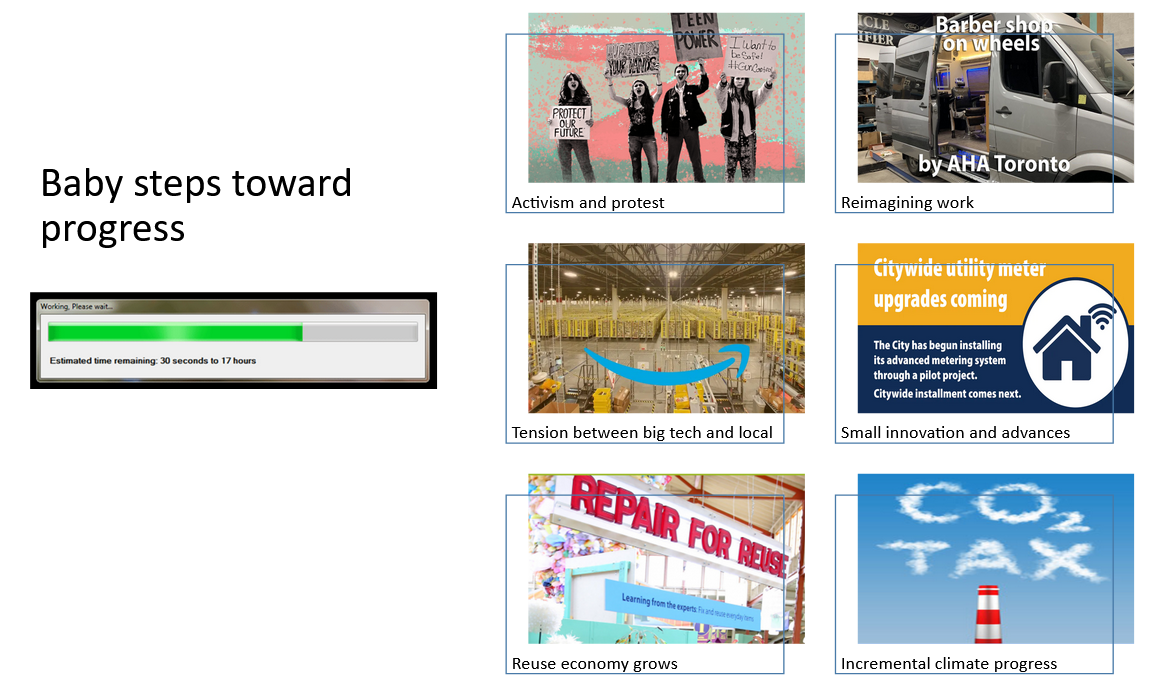
Across those three disparate futures, we found patterns that we compared with the current Strategic Plan to help us set the values that would best prepare the organization for whatever the future brings. The four values that emerged became the guideposts for the Technology Plan.
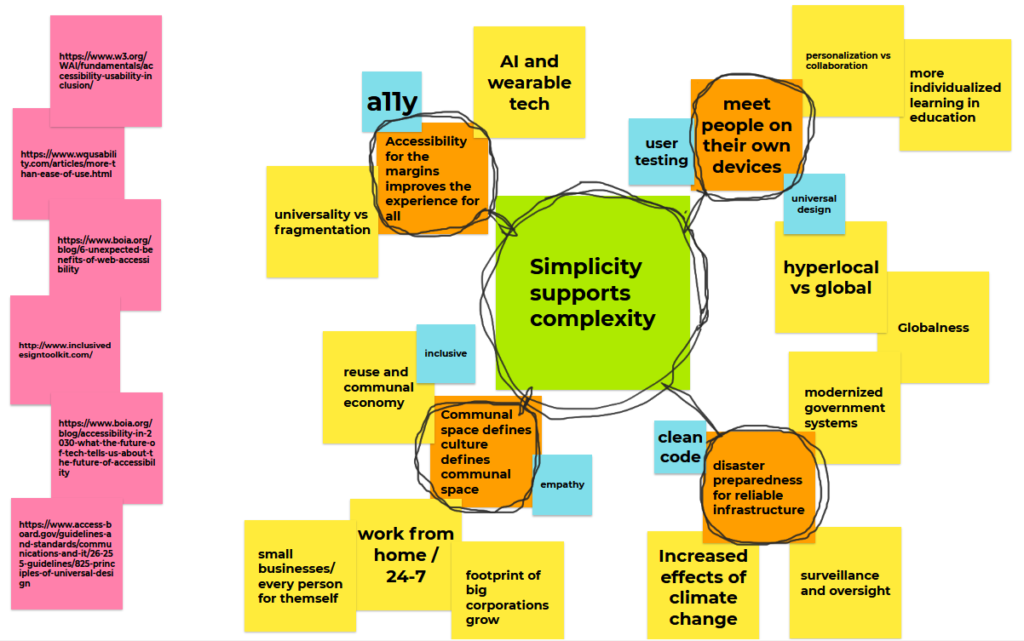
For each guidepost, I wrote an explanation, questions to ask during the decision-making process, and included additional resources for further consideration.
Part 2: An Agile-based project list to connect the plan to day-to-day tasks
I used Jira to create a flexible project list to carry out the values in our guideposts.
Each project that is added is tied to one or more guideposts. The team is able to define timelines, steps, and how to measure success for each project.
As new issues and ideas come up, we look at how they fit in with current projects for a more realistic view of what can be accomplished.
As my team works through projects, we mark progress and add notes as needed, which creates more documentation to be able to refer back to in the future.
Outcomes & Lessons Learned
Using strategic foresight to find patterns was a really effective way to look beyond the short-term goals of the organization.
Stakeholders (department heads and the board of directors) expressed a lot of interest in using these tools for a broader organizational strategic planning process. Ultimately, this was my goal, because a broader, more diverse group of stakeholders working together can introduce additional perspectives that could not be achieved with a two person team. By completing the Technology Plan process with a small team, we also gained confidence with the tools and techniques to repeat it on a larger scale.
Built on long-term, human-centered principles, the guideposts are intended to remain valid for years to come with only minor tweaks needed. With so many rapid changes in 2020 and 2021, we were surprised to see how many of our future trends were already in motion. Perhaps we didn’t think boldly enough or far enough out. Or perhaps the year was so turbulent that it set in motion some changes that will take time for humans to really internalize and respond to. Time will tell.
A human-centered plan made inclusive, accessible design and user research a clear priority in our process.
As part of this process, we defined steps to evaluate and improve accessibility. We formed an ongoing user research plan, and have been more proactively seeking feedback on service changes. While these have been goals and short-term projects in the past, this plan has helped create a more cohesive approach with more effective, measurable progress.
By aligning our Jira project list to guideposts, we are seeing overlaps more clearly.
Shortly after the plan was made, an urgent website compatibility issue required immediate attention. By grouping it with existing long term goals in the plan, we evaluated solutions for the immediate issue through the lens of how it works with the current site, but also with future changes.
This helps us be more proactive and less reactive, which builds our capacity to react more effectively.